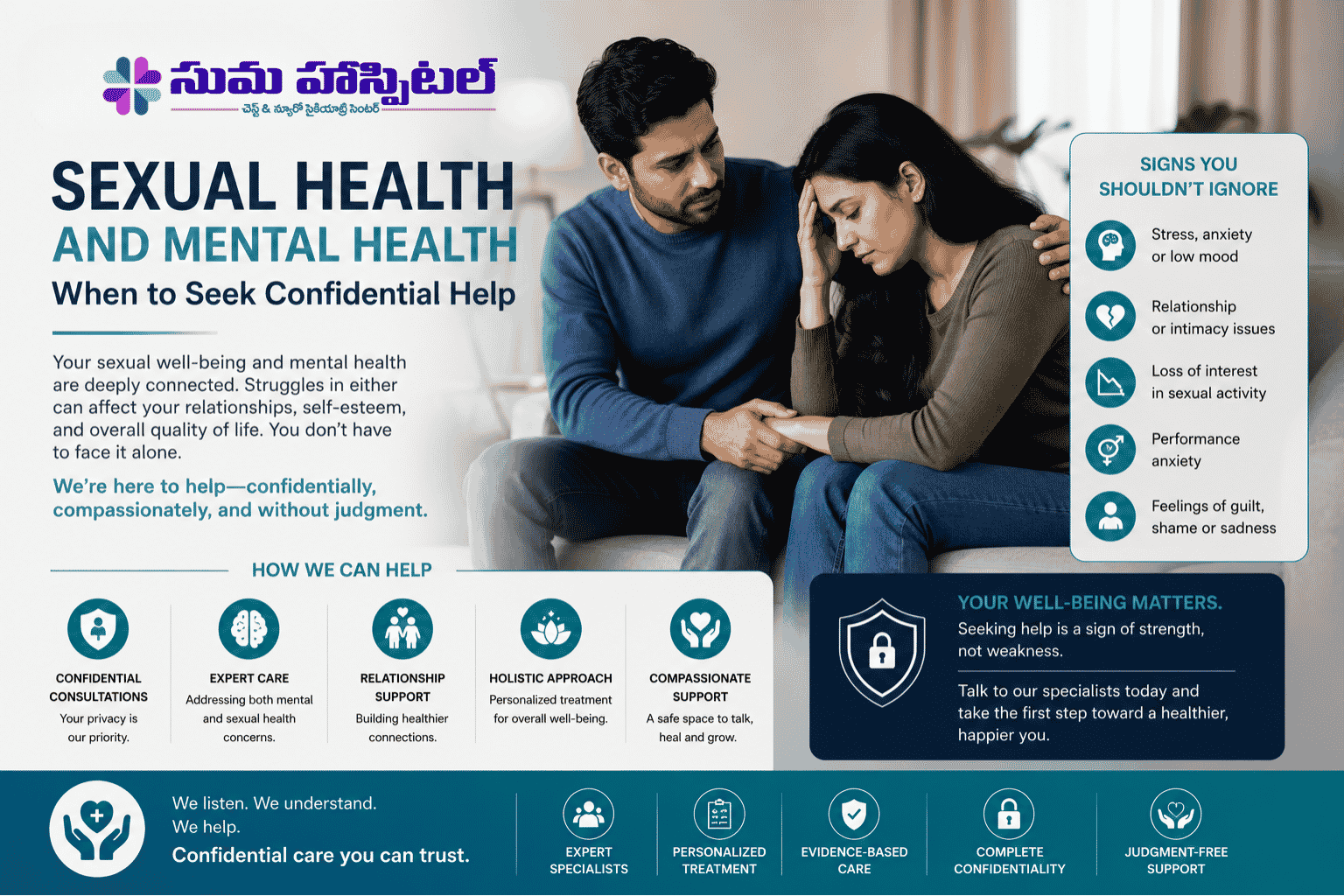
Sexual health is an important part of overall wellbeing. But many people hesitate to talk about sexual concerns because of embarrassment, fear, guilt, relationship pressure or social stigma.
Sexual difficulties are common and can affect confidence, marriage, relationships, mood, sleep and self-esteem. They may be linked with stress, anxiety, depression, relationship conflict, alcohol or tobacco use, medicines, medical illness or emotional distress.
At Suma Hospital, Karimnagar, Dr. L. Versi provides confidential psychiatric consultation for sexual performance anxiety, low desire, relationship-related sexual distress and mental health concerns affecting sexual wellbeing.
Sexual Health Is Connected With Mental Health
Sexual response is not only physical. It is also influenced by the brain, emotions, stress levels, body confidence, relationship comfort, sleep and overall health.
Common psychological and emotional factors include:
- Anxiety and overthinking
- Depression or low mood
- Stress and fatigue
- Relationship conflict
- Fear of failure
- Low self-esteem
- Past negative experiences
- Alcohol, tobacco or drug use
- Medication side effects
- Sleep problems
Because mind and body are connected, sexual health concerns often improve when the underlying mental health issue is identified and treated.
Common Sexual Health Concerns
1. Sexual Performance Anxiety
Performance anxiety happens when a person becomes worried about sexual performance before or during intimacy. This worry can create body tension, fear, avoidance and repeated self-doubt.
Common signs include:
- Fear of failure
- Overthinking before intimacy
- Avoiding sexual situations
- Loss of confidence
- Panic-like symptoms
- Repeated checking or reassurance seeking
This can become a cycle: one difficult experience leads to fear, fear increases pressure, and pressure worsens performance.
2. Low Sexual Desire
Low desire can happen in both men and women. It may be temporary during stress, fatigue, illness or relationship tension. It can also be linked with depression, anxiety, hormonal changes, medicines, sleep problems or emotional disconnection.
Low desire should be evaluated when it causes distress, relationship conflict or loss of confidence.
3. Relationship-Related Sexual Distress
Sexual difficulties may arise from communication gaps, resentment, trust issues, fear, past arguments, pressure to perform or emotional distance. Sometimes the sexual concern is not only a body issue but a relationship and emotional issue.
Professional consultation can help identify the psychological and relationship factors involved.
4. Erectile Confidence Concerns
Erection-related concerns may have physical, psychological or mixed causes. Anxiety, stress, depression and relationship concerns can cause or worsen erectile difficulties. Medical conditions like diabetes, blood pressure, heart disease, obesity and smoking can also contribute.
A proper evaluation helps decide whether psychiatric support, lifestyle change, medical testing or specialist referral is needed.
5. Early or Delayed Ejaculation Concerns
Ejaculation-related concerns can be linked with anxiety, stress, relationship pressure, sexual habits, medicines, alcohol use, depression or other health conditions. These concerns are treatable, but they should be discussed openly with a doctor.
6. Medicine or Substance-Related Sexual Concerns
Some medicines and substances can affect sexual desire, arousal or performance. Alcohol, tobacco, drugs, sedatives and some psychiatric or medical medicines may contribute.
Do not stop any prescribed medicine suddenly. Speak with a doctor before making changes.
When Should You Consult a Psychiatrist?
You should consider consultation if:
- Sexual concerns are causing anxiety, shame or relationship stress
- Fear of failure is affecting intimacy
- Sexual desire has reduced and it is causing distress
- Anxiety, depression or stress is affecting sexual confidence
- Alcohol, tobacco or drugs are involved
- Sexual difficulty started after emotional stress or medicine use
- You avoid intimacy due to fear or embarrassment
- Relationship pressure is worsening the concern
- The issue is repeated and affecting confidence
A psychiatrist can help evaluate emotional, psychological, relationship, addiction-related and medication-related factors.
What Happens During Consultation?
A sexual health consultation is private and professional. The doctor may ask about:
- Current symptoms
- Duration of the concern
- Stress, anxiety or depression symptoms
- Relationship history
- Sleep and lifestyle
- Alcohol, tobacco or drug use
- Current medicines
- Medical history
- Confidence and emotional wellbeing
Depending on the findings, treatment may include counselling guidance, anxiety management, treatment for depression or stress, addiction care, medication review, lifestyle correction or referral to another specialist when needed.
Treatment Options May Include
Treatment depends on the cause. It may include:
- Education and reassurance
- Stress and anxiety management
- Counselling guidance
- Relationship communication support
- Depression or anxiety treatment
- Medication review
- Addiction treatment
- Sleep improvement
- Lifestyle changes
- Medical referral when required
The goal is not only symptom improvement, but also confidence, comfort, communication and emotional wellbeing.
Confidential Sexual Health Consultation in Karimnagar
Sexual health concerns are common and treatable. You do not need to suffer silently or feel ashamed. A private consultation can help you understand the cause and choose the right treatment direction.
For confidential consultation, contact Dr. L. Versi at Suma Hospital, Karimnagar.
Call: +91 9912 42 43 43
Clinic: Suma Hospital, Beside Civil Hospital, Hospital Lane, Karimnagar, Telangana – 505001
FAQ
Issexual health consultation confidential?
Yes. Sexual health concerns are handled privately and professionally.
Can anxiety cause sexual performance problems?
Yes. Anxiety can create fear, overthinking, body tension and avoidance, which can affect sexual confidence and performance.
Can depression reduce sexual desire?
Yes. Depression can reduce interest, energy, confidence and emotional connection, which may affect sexual desire.
Can alcohol affect sexual health?
Yes. Alcohol may reduce anxiety temporarily, but it can worsen sexual performance, sleep, mood and dependence risk.
Should I stop medicines if I notice sexual side effects?
No. Do not stop prescribed medicines without medical advice. Speak with your doctor about safe options.