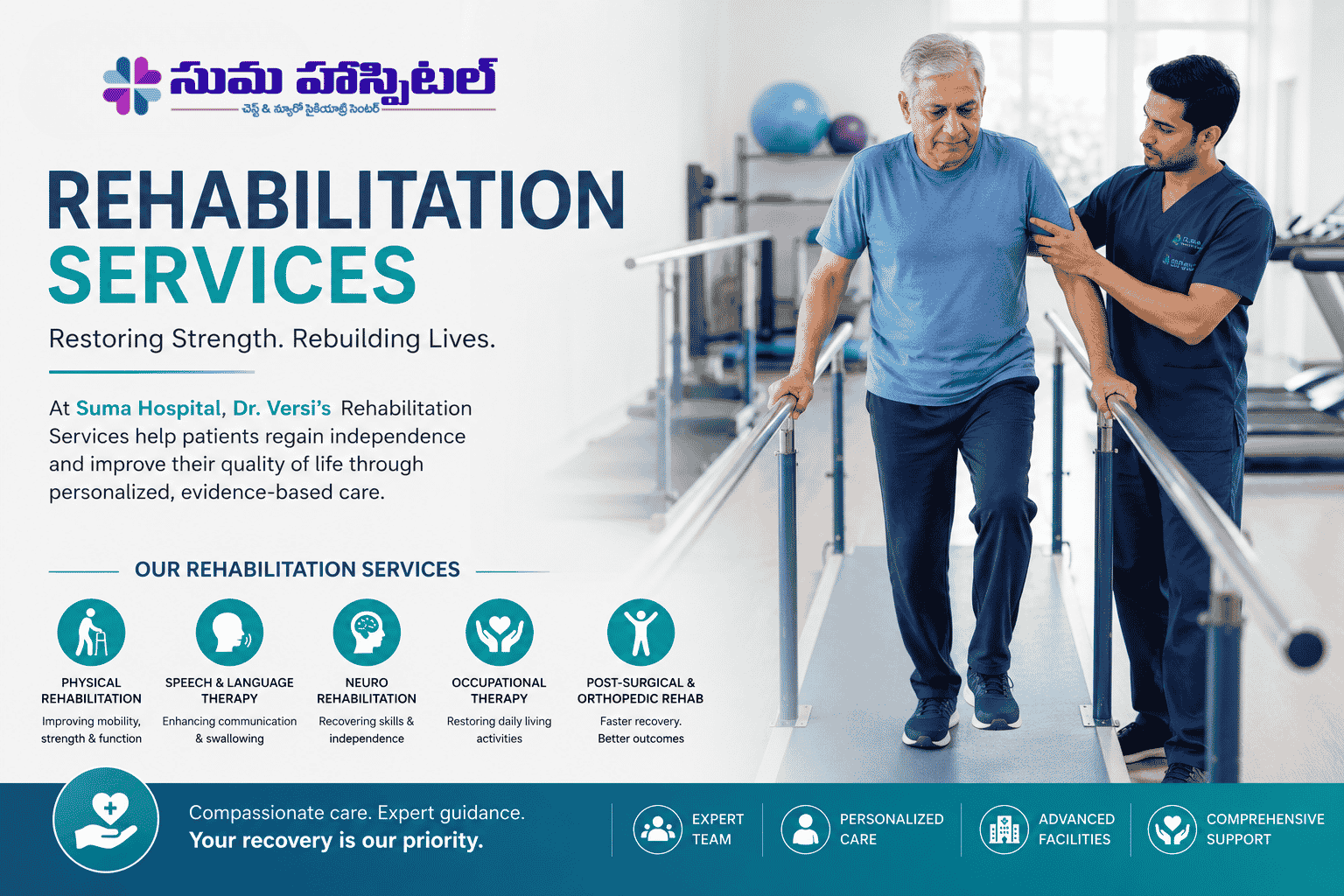
Rehabilitation services play a crucial role in helping individuals recover from mental health conditions, addiction, and behavioral challenges. These services are designed not just to treat symptoms, but to restore confidence, independence, and quality of life.
Under the guidance of experienced professionals like Dr. L. Versi, rehabilitation focuses on long-term healing and reintegration into society.
What Are Rehabilitation Services?
Rehabilitation services are structured programs that support individuals recovering from mental illness, substance abuse, or emotional difficulties. These programs combine medical care, therapy, and lifestyle support to help individuals regain control over their lives.
Types of Rehabilitation Services
1. Mental Health Rehabilitation
Helps individuals manage conditions like depression, anxiety, schizophrenia, and OCD through therapy, medication, and skill-building.
2. De-Addiction Rehabilitation
Focused on recovery from alcohol, drugs, or behavioral addictions like gaming or internet use.
3. Behavioral Therapy Programs
Includes therapies like Cognitive Behavioral Therapy (CBT) to change negative thought patterns and behaviors.
4. Social and Occupational Rehabilitation
Supports patients in rebuilding relationships, improving social skills, and returning to work or education.
Benefits of Rehabilitation Services
- Improves emotional stability and mental well-being
- Helps individuals regain independence
- Reduces chances of relapse
- Enhances social and family relationships
- Builds coping skills for long-term recovery
Who Needs Rehabilitation?
Rehabilitation is recommended for individuals who:
- Struggle with addiction (alcohol, drugs, digital addiction)
- Experience severe or long-term mental health issues
- Have difficulty managing daily life due to emotional problems
- Need structured support after psychiatric treatment
How Rehabilitation Works
Rehabilitation programs are personalized based on the individual’s condition. Typically, they include:
- Initial assessment and diagnosis
- Customized treatment planning
- Regular therapy sessions
- Medication management (if needed)
- Family counseling and support
- Continuous monitoring and follow-up
FAQs About Rehabilitation Services
How long does rehabilitation take?
The duration varies depending on the condition and severity. It can range from a few weeks to several months or longer for sustained recovery.
Is rehabilitation only for addiction?
No, rehabilitation is also used for mental health conditions like depression, anxiety, OCD, and schizophrenia.
Are rehabilitation programs confidential?
Yes, all rehabilitation services maintain strict confidentiality to protect patient privacy.
Can family members be involved in the process?
Yes, all rehabilitation services maintain strict confidentiality to protect patient privacy.
Can family members be involved in the process?
Yes, family support is an important part of recovery, and many programs include family counseling sessions.
What happens after rehabilitation?
After completing the program, patients receive follow-up care, lifestyle guidance, and support to prevent relapse and maintain progress.
Conclusion
Rehabilitation services are a vital step toward healing and rebuilding a meaningful life. With the right support system and professional care, recovery is not just possible—it’s sustainable.
If you or your loved ones are struggling, seeking timely help from experts like Dr. L. Versi can make a significant difference.