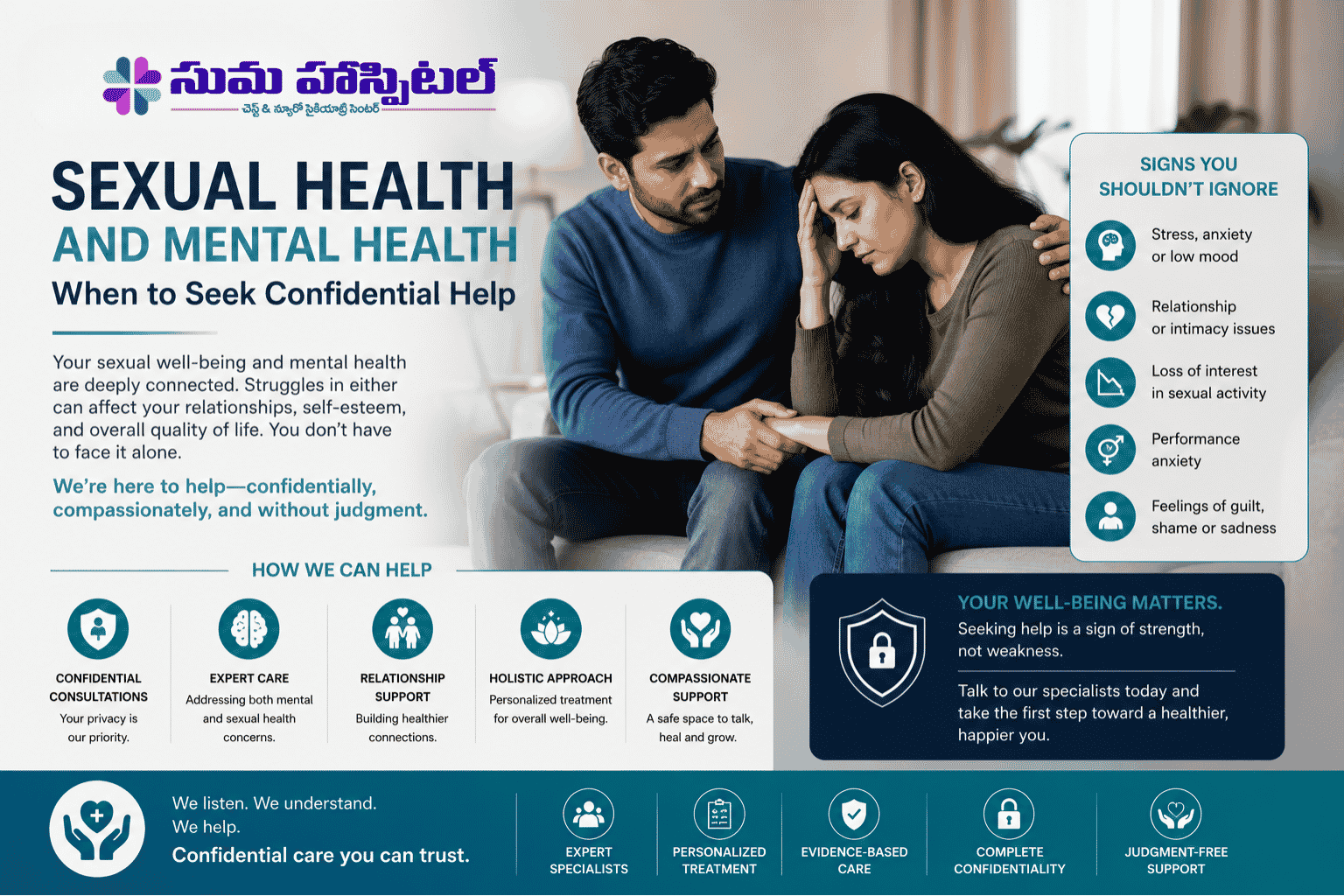
Feeling sad for a short time is a normal part of life. But depression is different. Depression can affect how a person thinks, feels, sleeps, eats, works, studies and relates to family members. It can reduce energy, confidence, motivation and interest in daily activities.
Depression is not weakness. It is a medical and mental health condition that can be treated with the right support.
At Suma Hospital, Karimnagar, Dr. L. Versi provides professional psychiatric evaluation and treatment support for depression, anxiety with depression, sleep problems, stress-related mood changes, addiction-related depression and emotional health concerns.
What Is Depression?
Depression is a mood disorder that causes persistent sadness, loss of interest, hopelessness or emotional numbness. It can also cause physical symptoms such as fatigue, sleep problems, appetite changes, body pain and poor concentration.
Some people with depression cry often. Some do not cry but feel empty or disconnected. Others may become irritable, angry, silent or withdrawn.
Depression can affect anyone, including students, working professionals, homemakers, elderly people and people with chronic illness.
Common Symptoms of Depression
Depression symptoms can vary from person to person. Common symptoms include:
- Persistent sadness, emptiness or hopelessness
- Loss of interest in work, studies, hobbies or family activities
- Tiredness and low energy
- Sleep disturbance or excessive sleep
- Appetite or weight changes
- Poor concentration and forgetfulness
- Irritability, anger or frustration
- Low confidence and guilt
- Social withdrawal
- Body pain, headache or heaviness
- Thoughts of death or self-harm
If these symptoms continue and affect daily life, it is better to consult a psychiatrist early.
Depression Is Not Always Visible
Many people with depression continue going to work, attending college or managing family responsibilities. From outside, they may look “normal,” but internally they may feel exhausted, hopeless or emotionally heavy.
This is why depression should not be judged only by appearance. If a person says they are struggling, it is important to listen and guide them toward professional help.
What Causes Depression?
Depression usually develops due to a combination of factors. These may include:
1. Stressful Life Events
Relationship problems, financial stress, job pressure, academic stress, grief, illness or family conflict can trigger depression.
2. Anxiety and Overthinking
Long-term anxiety, panic attacks, fear, sleep problems and constant overthinking can contribute to depression.
3. Sleep Disturbance
Poor sleep can worsen mood, irritability, focus and emotional control. Depression can also disturb sleep, creating a cycle.
4. Alcohol or Drug Use
Alcohol, tobacco, drugs and withdrawal states can worsen depression and reduce treatment response.
5. Medical Conditions
Thyroid problems, chronic pain, diabetes, heart disease and other medical conditions may be associated with depressive symptoms.
6. Family History
A family history of depression, bipolar disorder or other mental health conditions may increase risk.
Depression and Physical Symptoms
Depression is not only emotional. It can also affect the body. Some patients first notice physical complaints such as:
- Headache
- Body pain
- Fatigue
- Chest heaviness
- Stomach discomfort
- Poor sleep
- Low appetite
- Reduced sexual interest
When repeated medical tests are normal but symptoms continue with low mood, anxiety or stress, psychiatric evaluation may help.
Depression and Suicide Risk
Depression can sometimes lead to thoughts such as “life is not worth living” or “I want to disappear.” These thoughts must be taken seriously.
Seek urgent help if someone has:
- Suicidal thoughts
- Self-harm thoughts
- Severe hopelessness
- Refusal to eat or drink
- Sudden withdrawal
- Giving away belongings
- Talking about death
- Dangerous behaviour
Do not leave the person alone if there is risk of self-harm. Contact a doctor, emergency service or nearest hospital immediately.
How Depression Is Treated
Treatment depends on symptoms, severity, duration, safety risk, medical history and patient needs.
Depression treatment may include:
- Psychiatric evaluation
- Counselling guidance
- Antidepressant medicines when needed
- Sleep correction
- Stress management
- Treatment of anxiety or addiction
- Family support
- Lifestyle changes
- Regular follow-up
Not every person needs the same treatment. Some people need counselling and routine correction, while others may need medication and closer follow-up.
Do Antidepressants Cause Dependence?
Antidepressants are not the same as sleeping tablets or addictive substances. They are prescribed when clinically needed and should be taken under medical supervision.
Do not stop antidepressants suddenly without asking the doctor. Sudden stopping may cause symptoms to return or withdrawal-like discomfort in some people.
What Family Members Can Do
Family support is very important in depression recovery.
Helpful steps include:
- Listen without judging
- Avoid saying “just be positive”
- Encourage medical consultation
- Support regular sleep and meals
- Help with daily routine
- Watch for self-harm warning signs
- Encourage follow-up visits
- Avoid blaming the person
Depression improves better when the patient feels understood and supported.
When Should You Consult Dr. L. Versi?
You may consult Dr. L. Versi if you or a family member has:
- Persistent low mood
- Loss of interest
- Anxiety with depression
- Sleep problems
- Addiction-related mood changes
- Poor concentration
- Irritability and anger
- Hopelessness
- Body symptoms linked with stress
- Thoughts of self-harm
- Repeated emotional breakdowns
Early consultation can reduce suffering and improve recovery.
Book Consultation in Karimnagar
If depression is affecting your mood, sleep, work, family life or confidence, help is available.
Doctor: Dr. L. Versi
Clinic: Suma Hospital, Beside Civil Hospital, Hospital Lane, Karimnagar, Telangana – 505001
Call: +91 9912 42 43 43
FAQ
Is depression a real illness?
Yes. Depression is a real mental health condition that affects mood, thoughts, sleep, energy, appetite and daily functioning.
When should I consult a psychiatrist for depression?
If low mood, loss of interest, sleep problems, fatigue, hopelessness or poor concentration continues and affects daily life, consultation is recommended.
Does every depression patient need medicine?
No. Treatment depends on severity and clinical assessment. Some people need counselling guidance and lifestyle changes, while others may need medicines.
Can depression happen with anxiety?
Yes. Depression and anxiety commonly occur together. A person may feel worried, restless, sad, tired and unable to sleep.
Can depression be treated completely?
Many people recover well with proper treatment, follow-up, family support and lifestyle correction. Some may need longer-term care to prevent relapse.
What should I do if someone talks about suicide?
Take it seriously. Stay with the person, remove immediate dangers, inform family, and seek urgent medical or emergency help.