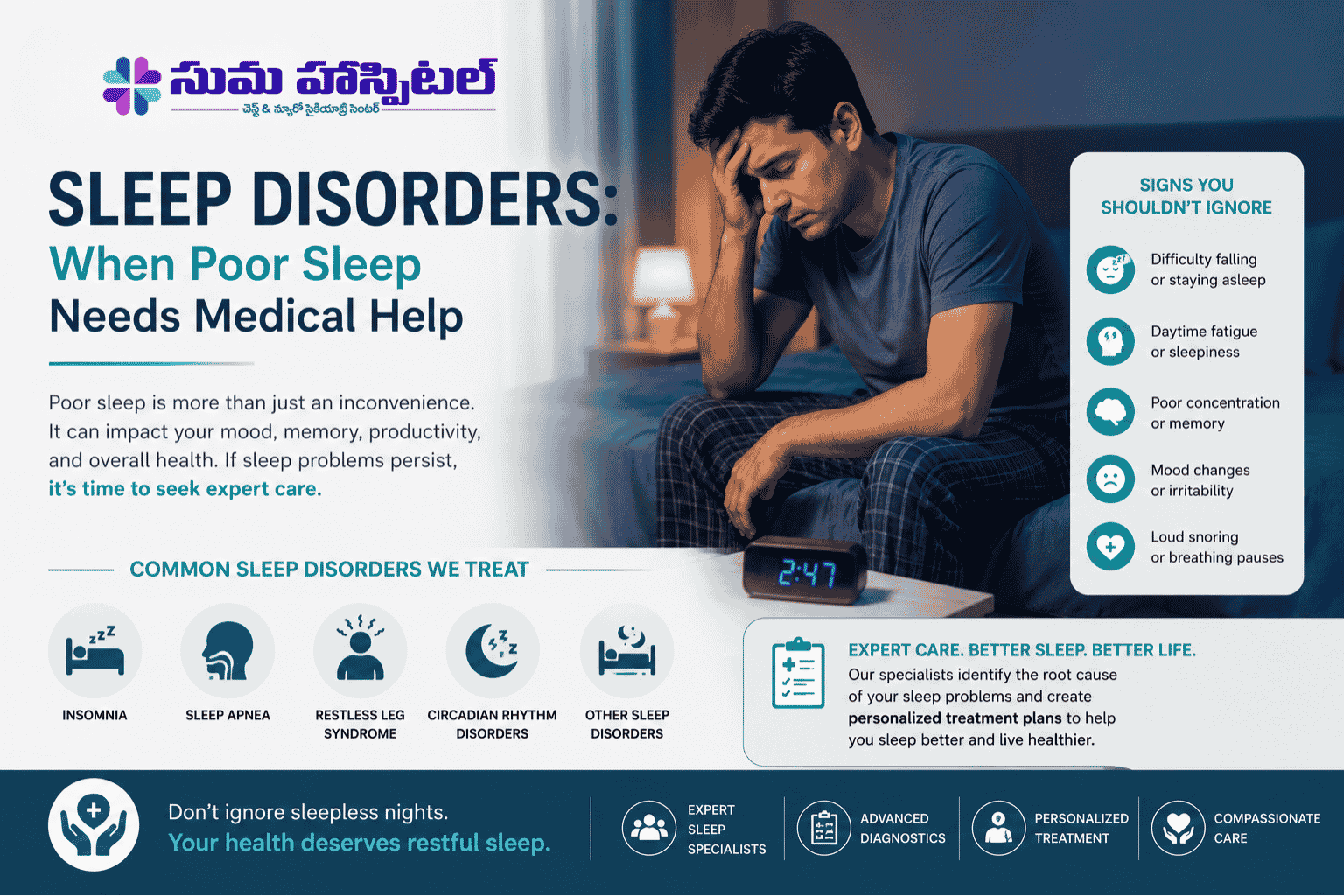
Sleep is not just rest. It supports mood, memory, concentration, emotional control, immunity, heart health and daily energy. When sleep becomes disturbed for many days or weeks, it can affect work, studies, relationships, family life and mental health.
Many people ignore sleep problems thinking they are caused only by stress. But persistent sleep difficulty may be linked with anxiety, depression, addiction, lifestyle problems, medical illness or a sleep disorder that needs evaluation.
At Suma Hospital, Karimnagar, Dr. L. Versi provides psychiatric evaluation and treatment support for sleep problems linked with mental health, stress, anxiety, depression, addiction and emotional concerns.
Common Types of Sleep Problems
1. Insomnia
Insomnia means difficulty falling asleep, staying asleep or waking too early and not feeling refreshed. It may be short-term due to stress, travel, illness or routine changes. It can also become long-term when connected with anxiety, depression, overthinking, pain, medicines or lifestyle habits.
Common signs include:
- Lying awake for long periods
- Repeated waking at night
- Early morning waking
- Daytime tiredness
- Irritability and poor concentration
- Fear of not sleeping
2. Sleep Anxiety
Some people become anxious about sleep itself. They start worrying in the evening: “What if I don’t sleep tonight?” This fear increases body tension and overthinking, which makes sleep even harder.
Sleep anxiety is common in people with stress, panic symptoms, depression, work pressure or repeated insomnia.
3. Nightmares and Disturbed Sleep
Frequent nightmares, sudden waking with fear, trauma-related dreams or fear of going back to sleep can disturb emotional health. Nightmares may occur with stress, anxiety, trauma, depression, substance use or certain medicines.
4. Snoring and Possible Sleep Apnea
Loud snoring, choking during sleep, breathing pauses, morning headaches and daytime sleepiness may suggest sleep apnea. Sleep apnea needs medical evaluation because it can affect oxygen levels and overall health.
A psychiatrist may identify the warning signs and advise further sleep evaluation or specialist referral when needed.
5. Restless Legs and Body Restlessness
Some people feel uncomfortable sensations in the legs at night with an urge to move them. This can delay sleep and cause repeated waking. Restless sleep can also happen with anxiety, medication effects, lifestyle issues or medical conditions.
6. Addiction-Related Sleep Problems
Alcohol, tobacco, drugs, excessive screen use and behavioural addictions can disturb sleep. Alcohol may make a person sleepy initially, but it often reduces sleep quality and increases early waking. Withdrawal from alcohol, nicotine or drugs can also cause insomnia, anxiety and disturbed sleep.
How Sleep and Mental Health Are Connected
Sleep and mental health affect each other. Poor sleep can worsen anxiety, depression, irritability, anger, poor concentration and cravings. At the same time, mental health conditions can cause sleep problems.
Sleep disturbance is commonly seen with:
- Anxiety and panic attacks
- Depression
- Bipolar disorder
- OCD and overthinking
- PTSD and trauma
- ADHD
- Alcohol or drug addiction
- Tobacco dependence
- Work stress and emotional burnout
That is why treating only sleep without understanding the emotional and psychiatric background may not solve the problem fully.
When Should You Consult a Psychiatrist?
You should consider consultation if:
- Sleep problems continue for more than a few days or weeks
- Poor sleep affects work, studies or relationships
- You feel anxious, low, irritable or emotionally unstable
- You depend on alcohol or tablets to sleep
- You have panic symptoms at night
- You wake frequently with fear or nightmares
- You feel sleepy during the day despite enough time in bed
- Family members notice loud snoring or breathing pauses
- Sleep problems started after stress, grief, trauma or addiction
Seek urgent help if sleep problems are associated with suicidal thoughts, severe depression, confusion, hallucinations, substance withdrawal, chest pain, severe breathlessness or sudden behaviour changes.
How Dr. L. Versi Evaluates Sleep Disorders
A proper sleep evaluation may include discussion about:
- Sleep timing and routine
- Stress, anxiety and mood symptoms
- Snoring or breathing concerns
- Nightmares or panic symptoms
- Alcohol, tobacco or drug use
- Current medicines
- Work schedule and screen habits
- Medical and psychiatric history
Based on the assessment, treatment may include sleep routine correction, stress management, counselling guidance, medication when clinically required, addiction treatment, mental health care or referral for sleep study if needed.
Simple Sleep Habits That Can Help
These steps may support better sleep:
- Keep a regular sleep and wake time
- Avoid late-night screen use
- Reduce evening caffeine
- Avoid alcohol as a sleep solution
- Keep the bedroom quiet and comfortable
- Use the bed mainly for sleep
- Avoid long daytime naps
- Get morning sunlight when possible
- Speak to a doctor before using sleeping tablets
These habits help, but persistent sleep problems need proper evaluation.
Book Consultation
If you are struggling with insomnia, poor sleep quality, nightmares, daytime tiredness, anxiety at night or addiction-related sleep disturbance, consult Dr. L. Versi at Suma Hospital, Karimnagar.
Call: +91 9912 42 43 43
Clinic: Suma Hospital, Beside Civil Hospital, Hospital Lane, Karimnagar, Telangana – 505001
FAQ
Is insomnia always due to stress?
No. Insomnia may be linked with stress, anxiety, depression, medicines, pain, addiction, sleep apnea or other medical conditions.
Can anxiety cause sleep problems?
Yes. Anxiety can cause racing thoughts, restlessness, panic at night and fear of not sleeping.
Does every sleep problem need sleeping tablets?
No. Treatment depends on the cause. Many people need sleep routine correction, anxiety treatment, counselling guidance or treatment of an underlying condition.
Can alcohol help sleep?
Alcohol may cause sleepiness at first, but it can disturb sleep quality and increase dependence risk.
When is snoring a concern?
Snoring needs medical evaluation if it is loud, associated with choking, breathing pauses, morning headache or daytime sleepiness.